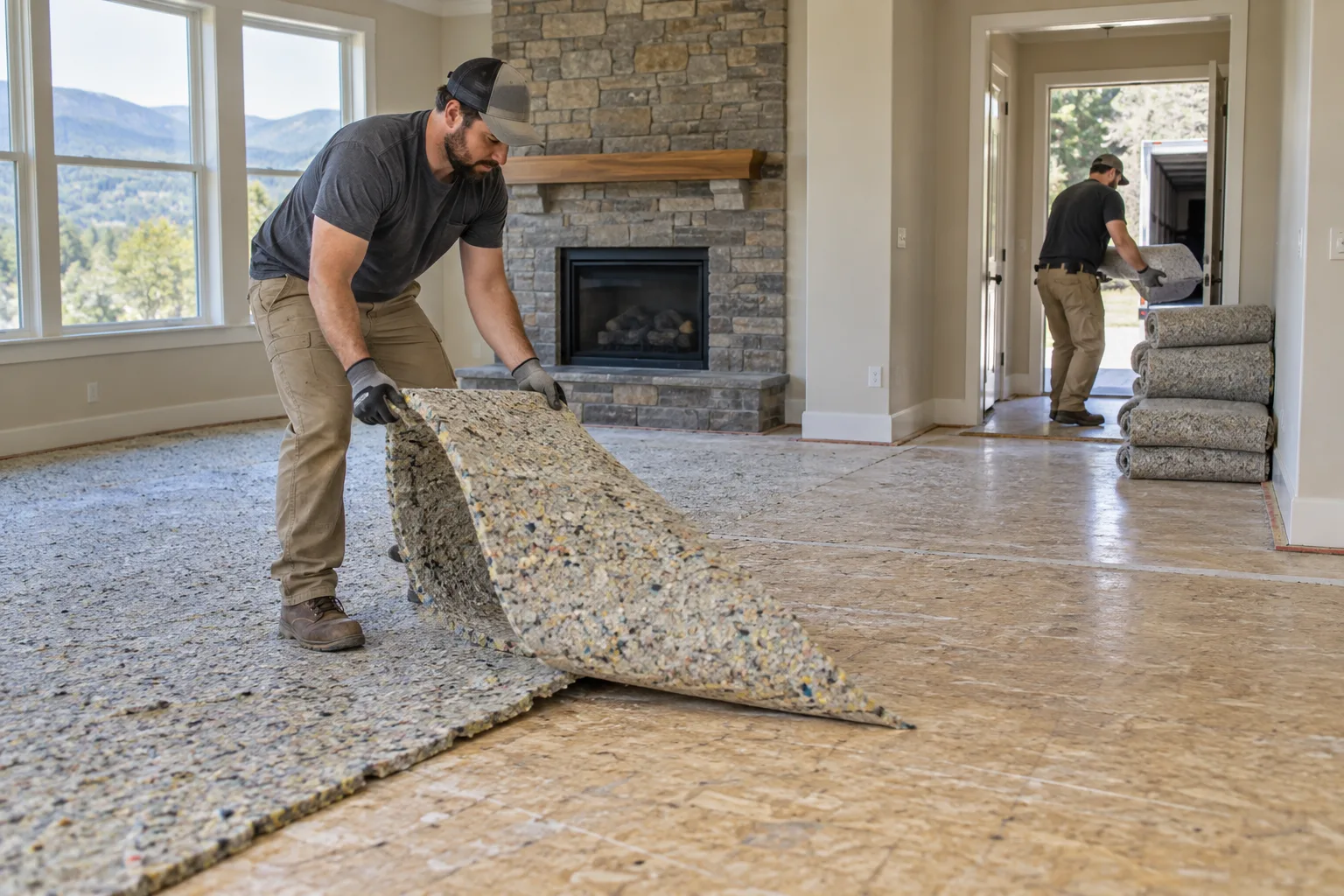
Most carpet systems include the carpet, a separate pad, perimeter tack strip, and fasteners. The pad may be stapled, glued in spots, or loose. Age, moisture, and traffic can make it crumble or adhere to the floor.
Expect more than one layer
The exposed surface may be plywood, oriented strand board, concrete, or an older finished floor. Its condition cannot be confirmed until the covering comes up.
Photograph what appears
Pause for photos if you uncover staining, damaged wood, unknown resilient flooring, or heavy adhesive. Those conditions may require a flooring contractor, moisture specialist, or other qualified assessment before the next surface goes down.
Do not sand, grind, or disturb an unknown older flooring material until its composition and safe handling are understood.
Define clean enough
Removal and broom-cleaning do not automatically include repairs, leveling, moisture treatment, adhesive grinding, or finish preparation. Ask the next installer what condition they require and compare that with the removal scope.
Pickup-readiness checklist
- Pad type noted
- Fastening method visible
- Subfloor photographed
- Stains or damage flagged
- Installer requirements confirmed
Next step
Use the checklist to gather the room and floor details, then review the companion carpet padding removal service page. Confirm what the next flooring contractor expects before removal begins.
Sources and scope
Service scope was checked against the client’s published carpet acceptance, current North Carolina carpet-removal pages, and customer questions observed in current search results on October 1, 2026. Building rules and floor conditions still require job-specific review.